🗓️ Week 05
Aristotle’s Poetics
PHIL343A – Aesthetics
02 Sep 2026
Purpose and Telos as a Mimetic Object
Delight
Mental image of beauty
e.g., grandfather, and memory of grandfather
Is one more valuable than the other?
Mental and physical pleasure
Mental pleasure, e.g., memory of grandfather
Physical pleasure, e.g., sight of grandfather
Learning
Learning through pleasure
Why?
Intimacy between our souls and our flesh
Classification of Pleasure
| Mental | Physical | |
|---|---|---|
| Object of higher pleasure | Memory of grandfather | |
| Object of lower pleasure | Sight of grandfather |
But this doesn’t seem right!
Augustine on Music
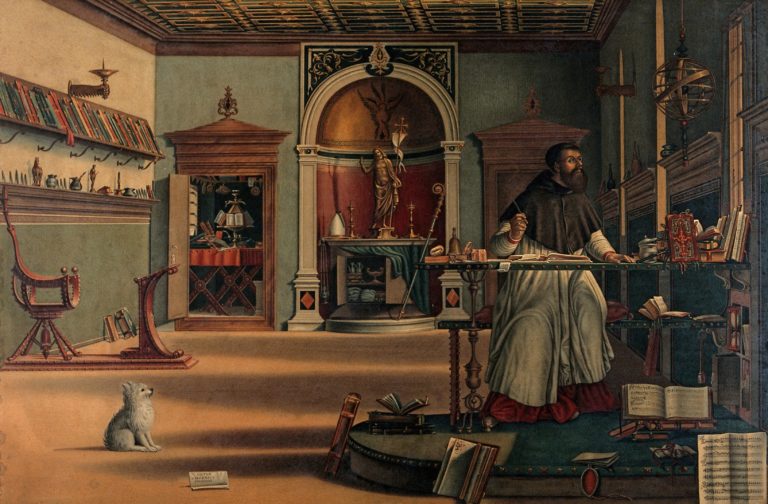
Painting by Carpaccio of Augustine in his study being visited by Saint Jerome
Who was Saint Augustine?
De Musica
We must not hate what is below us, but rather with God’s help put it in its right place, setting in right order what is below us, ourselves, and what is above us, and not being offended by the lower, but delighting only in the higher.
- Perception of the beautiful
- and its constrast against perception of evil
- How to do it?
If syllables in a poem had life and perception for just as long as their sounds lasted, the rhythmicality and beauty of the whole intricately inwoven work could not give them pleasure.
I think differently about my father whom I have seen and about my grandfather whom I have never seen. My thought of my father comes from memory, but my thought of my grandfather comes from mental movements arising out of other mental movements which are contained in memory.
Our rhythmic or metric art, which is used by makers of verses, comprises certain rhythmical measurements according to which they make the verses.
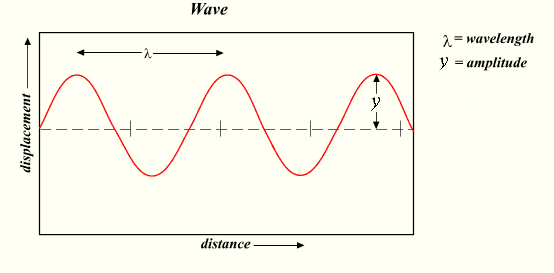
Measurement of wave, distance traveled over period of time
Additionally, what we experience as different sounds, are the different frequencies at which these vibrations occur. In western music, most instruments are tuned to a standard frequency of 440 Hz.
St. Bonaventure
External light, mechanical skill
lower light, sense perception
inner light, philosophical knowledge
higher light, grace and Sacred Scripture
1. External
weaving
armor-making
agriculture
hunting
navigation
medicine
fine-arts
2. Sense Perceptions
Four Elements
But what about essense?
Five Divisions
Corresponding with five senses.
sight
hearing
smell
taste
touch
3. Reason
Consider:
Speech
natural philosophy
things
moral philosophy
and conduct
Purpose?
Express
Teach
Persuade
Apprehend
Judge
Motivate
4. Higher
Spiritual Truths
Moral ones
Purpose of the previous two

PHIL343A – Aesthetics Aristotle